Author - proudhr

Digital.Personal.Data.Protection.Act

Digital Personal Data Protection Act

Introduction The Digital Personal Data Protection Act is India’s policy describing the ways for acquiring, using, storing, and safeguarding personal data in digital contexts. This rule applies to organisations and platforms that manage personal information such as names, phone numbers, email addresses, identity information, and any other data that can be used to identify an individual. Essentially, the Act outlines fundamental standards governing the handling of personal data and the responsibility that organisations hold while collecting or processing such information. The [...]

Read more...

HR Audit: A Strategic Tool for Evaluating Human Resource Effectiveness

In today’s complex regulatory and business environment, organizations are expected not only to achieve financial performance but also to maintain ethical employment practices, statutory compliance and a strong people management system. Human Resources (HR) plays a central role in achieving these objectives. An HR Audit is a systematic examination of HR policies, procedures, documentation, systems and practices to ensure legal compliance, operational efficiency and alignment with organizational goals. In the context of the manufacturing sector, these audits serve as a [...]

Read more...
anti-bribery

Anti-Bribery and Anti-Corruption (ABAC) in India: A Complete Guide to Laws, Importance, and Compliance (2025 Update)

Anti-bribery law in India, anti-corruption legislation India, Prevention of Corruption Act, PCA 2018 amendment, Indian anti-corruption laws, PMLA compliance, Lokpal Act, ABAC policy India, corporate compliance India. Introduction Bribery and corruption weaken institutions, distort markets, and create long-term barriers to ethical governance. In India, these issues affect everyday life — from public services to major business transactions. To protect the integrity of institutions and promote transparency, India has developed a strong Anti-Bribery and Anti-Corruption (ABAC) legal framework enforced through multiple laws [...]

Read more...
Soft.Skill4

How to Ensure Learning of Soft Skill Training is Reimbursed

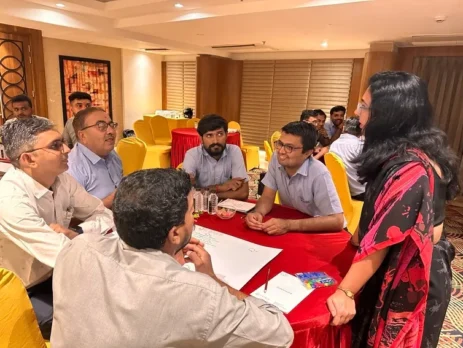
Enhancing the impact of soft skills training: a comprehensive guide. In the modern work environment, the significance of soft skills is on par with technical proficiency. These crucial non-technical skills—such as effective communication, collaboration, critical thinking, and emotional intelligence—are vital for fostering a productive and harmonious work atmosphere. Soft skills training prepares employees to communicate and work harmoniously with their colleagues. By offering comprehensive training programs, organizations can equip their employees with the necessary skills to excel in their positions, [...]

Read more...
soft-sckile

5 key soft skills which will enhance employee performance

1. Communication The capacity to effectively and concisely explain information to others is known as communication abilities. They are crucial for establishing rapport, settling disputes, and succeeding in life. Effective communication is essential in both private and work environments. For instance, companies can establish and preserve solid client connections by using efficient communication techniques. Written Communication The technique of communicating ideas or information through written language is known as written communication. It entails communicating concepts, ideas, or facts in writing such that [...]

Read more...
soft.skills2

How to conduct soft skills training for your employees?

Employees must receive soft skills training since it improves collaboration, communication, and problem-solving capabilities, which raises output and increases job satisfaction. Clear communication minimizes misinterpretations, and cooperative abilities promote cooperation and dispute settlement. Workers grow more robust and adaptive, managing change and stress more skilfully. Customer satisfaction increases with better customer service and empathy. Soft skill training also helps people grow professionally and advance in their careers by preparing them for leadership responsibilities. All things considered, an organization’s competitive [...]

Read more...
proud hr

7 Essential Qualities Every Leader Needs for Success

Steve Jobs once said, ‘Innovation distinguishes between a leader and a follower.’ Leadership isn’t just about guiding a team—it’s about navigating challenges, inspiring innovation, and fostering resilience. While the entrepreneurial journey is exhilarating, it demands a unique blend of skills and qualities to steer the ship toward success. As an expert leader, I’ve distilled these essential qualities into seven pillars that are crucial for anyone aspiring to lead with excellence. 1. Visionary Insight: A leader’s vision is the compass that guides the [...]

Read more...

Top 5 Mistakes to Avoid During a Behavioural Interview

When it comes to Job interviews, first impression really matters a lot. So make sure when you go for the interview ahead you avoid these common interview mistakes. Being Unprepared: Interview preparation is crucial to being confident and ready to answer  the interviewer’s questions. Carefully read the company’s history, job  position and competitors, and get to know its key members. Make sure  you understand all the responsibilities assigned. Not doing so will make  you look lazy and unattractive.Preparation also means determining how to answer questions during an interview, planning your  approach, and taking into account any delays you may encounter.There’s no excuse for being late for a job interview, so show your interest by being on time. . Always take the details of the interview, so that you can update the person if any problems arises. For a virtual call, make sure all your technology is working and set up  correctly,  you have access to internet, alternative source of data in case wifi is not working make sure you have  close at hand and eliminate all  distractions. Incorrect Dressing: Dressing up is a must, so choose your outfit wisely. Clothes should be clean and properly ironed. Knowing the type of company you’re applying for should give you an idea [...]

Read more...

How to Identify Behavioural Competencies in Candidates? What are the competencies required for HR professionals?

What are Job Competencies? Job Competencies are broadly categorized into two types: Behavioural Competencies Technical/FunctionalCompetencies Behavioral Competencies: Behavioral Competencies help you identify employee behavioral strengths that contribute to organizational success. They define not only the ability to do something but how something should be done. When a manager is hiring an employee they generally look for behavioural competencies like interpersonal skills, the ability to accept constructive criticism, the ability to understand the perspective of others, decision making skills, time management, taking responsibilities for their action. Examples of Behavioural Competencies: 1. Competency – Management Competency Behavioural Description – Set clear goals for team members, Create work plans against organizational goals, Provide honest and Regular feedback 2. Competency – Commitment Behaviour Description-General Knowledge, Take Ownership, Meet Obligations 3. Competence – Values ​​& Ethics Behaviour Description – Comply with Code of Conduct, Align with Company Values   Technical/Functional Abilities: Functional Abilities are more like an Employee’s technical skills, they contribute much more than that to an organizational productivity. It is more about technical Skills the employee needs to possess to [...]

Read more...

10 Most Common Behavioural Interview Questions (BEI) and how to answer them?

What do you mean by Behavioural Event Questions and Answers?   Behavioural interview questions are questions based on how you would behaviour in a particular situation. They are designed to determine how you react to stress, your level of competency and how you behave in a professional setting. They also allow the interviewer to get a much better understanding of you as a candidate.   Why Employers Ask Behavioural Questions?   Behavioural questions are designed to understand how you will react to a particular work situation and how you can  solve problems  to be [...]

Read more...